Research News

2026
Apr

Sailing forward: A review of contrasts and synergies between racing and robotic sailing

For thousands of years, humanity’s use of wind energy for navigation has run through the entire Age of Sail. However, driven by modern technology, the ancient sport of sailing has quietly diverged into two parallel development trajectories in scientific research: one is racing sailing, which pursues ultimate speed and human limits; the other is autonomous sailboats/unmanned sailboats, which target unknown waters and seek long-term autonomous operations.
2026
Feb

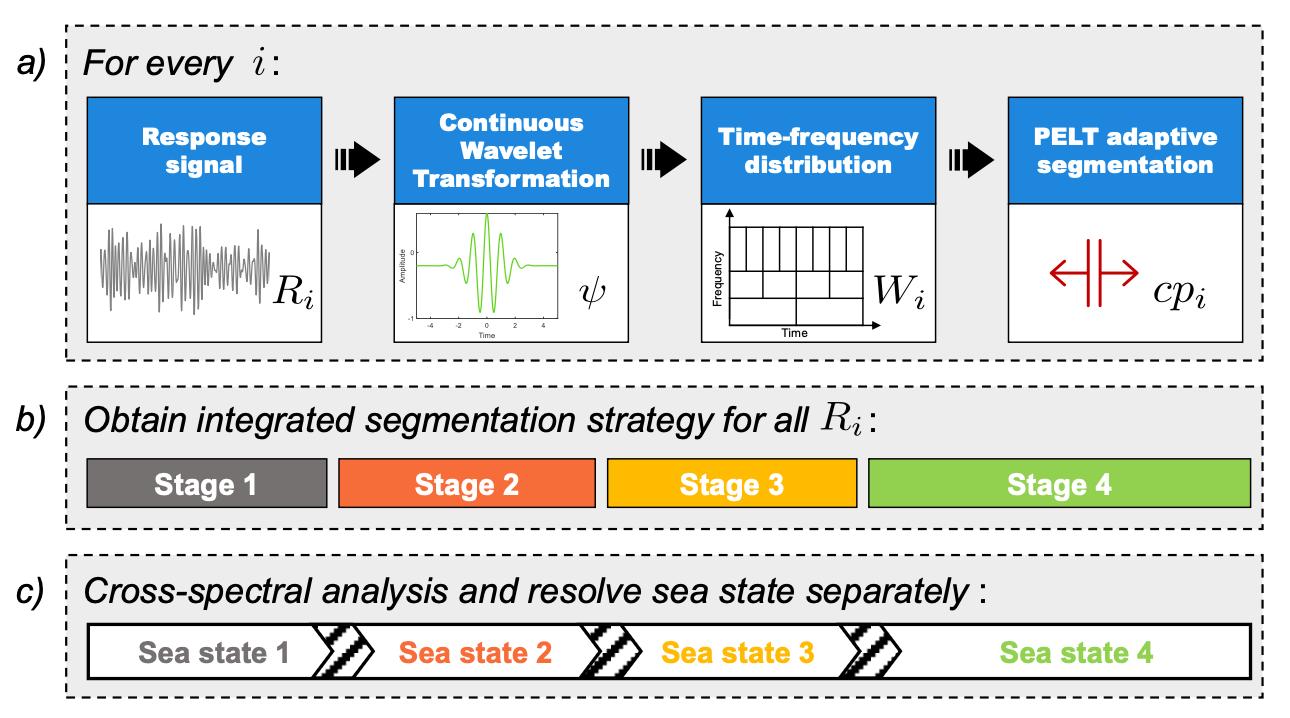
Adaptive Sea State Estimation Based on Ship Motions in Semi-stationary Sea States

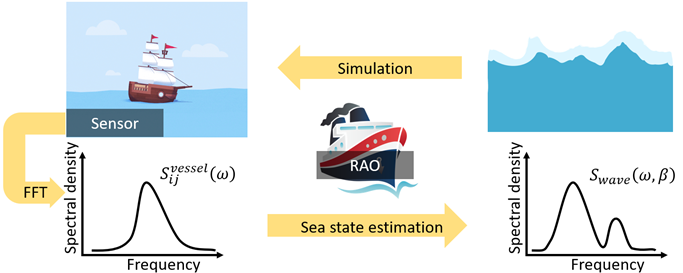
Environmental information is critical for ensuring the safety of complex marine operations (e.g., offshore crane operations and dynamic positioning), with waves being the primary external force affecting floating structures. Accurate sea state estimation (SSE) not only significantly enhances operational efficiency but also serves as vital support for real-time decision-making and risk control. The wave buoy analogy (WBA) utilizes ship motion data to estimate wave energy distribution; due to its cost-effectiveness, flexibility, and lack of need for additional sensing equipment, it has gradually become one of the most important real-time monitoring methods in the field of ocean engineering.

Featured image for Research News
2025
Oct

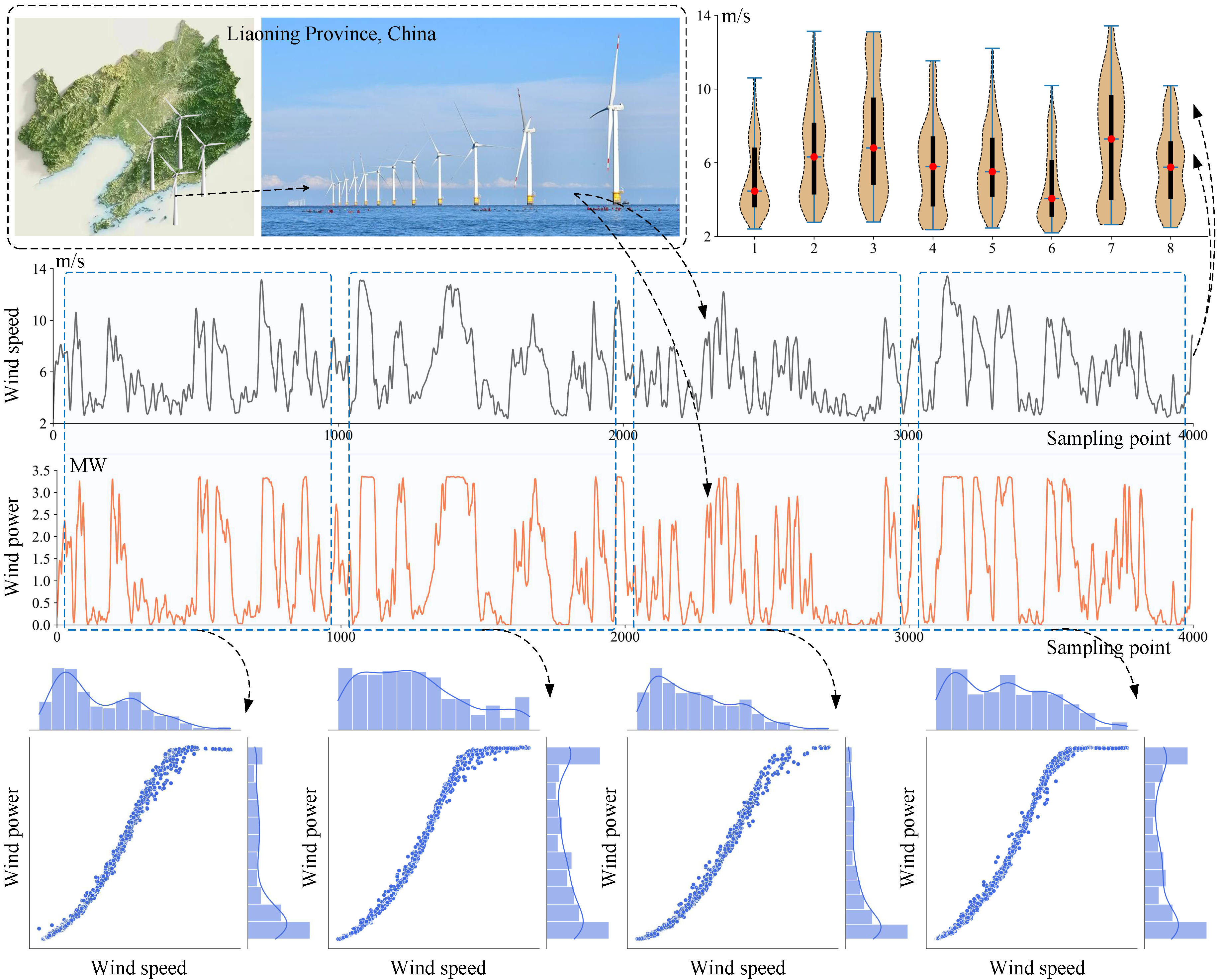
Incremental transfer learning based on temporal-frequency convolution interaction for multi-task prediction of wind speed and wind power

This paper introduces an incremental transfer learning approach based on temporal-frequency convolution interaction for multi-task prediction of wind speed and power in newly-built wind farms with insufficient historical data. The method integrates a temporal-frequency convolutional interactive neural network into a parallel framework with circular convolution and gated recurrent units, achieving significant reduction in prediction errors compared to classical LSTM algorithms.

Featured image for Research News

Sparse reconstruction of the flow field around a submerged platform in internal solitary waves

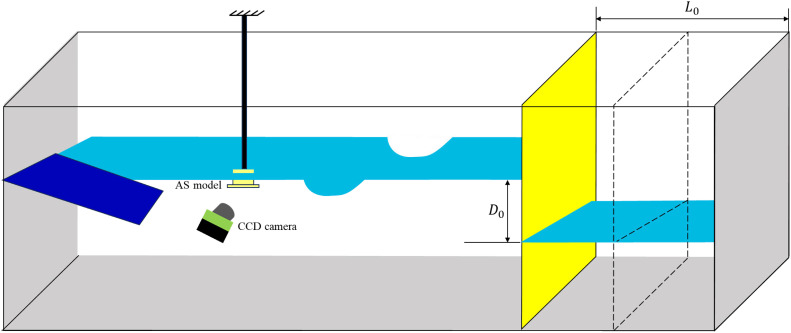
This research proposes a sparse flow field reconstruction method integrating Physics-Informed Neural Networks (PINN) with Attention Mechanisms for submerged platforms under internal solitary waves. It achieves high-fidelity reconstruction with extremely sparse observation data by embedding Navier-Stokes equations into neural network constraints.

Featured image for Research News
2025
Jul

Multi-task prediction of wind speed and time-varying wind shear coefficient using dynamic graph interactive neural network

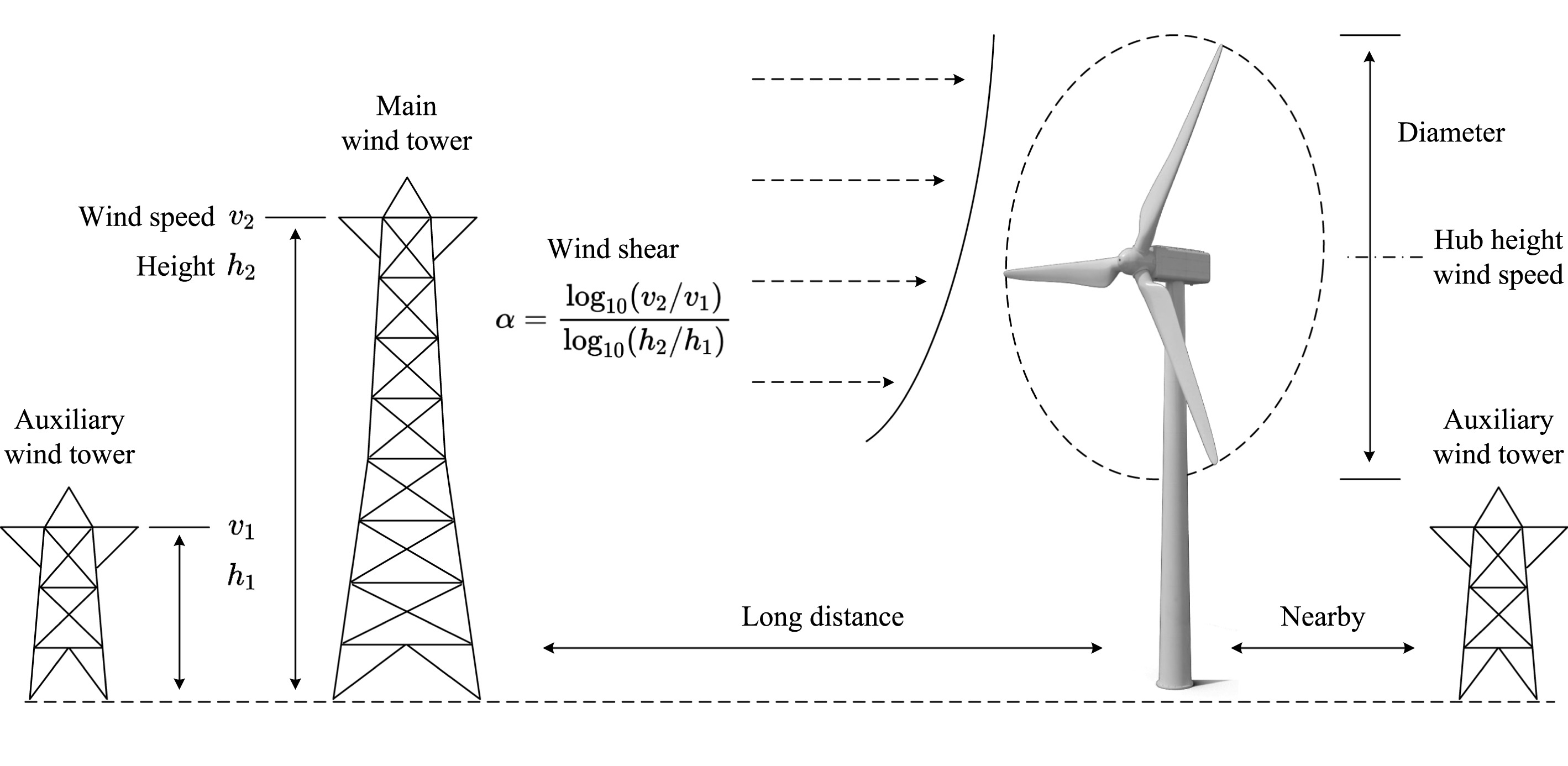
This research presents a multi-task learning approach based on graph neural networks for simultaneous prediction of wind speed and wind shear coefficient. The method addresses the dynamic nature of wind shear coefficients that vary with meteorological conditions, overcoming challenges in coupling wind shear phenomena with wind speed prediction.

Featured image for Research News

A selective memory attention mechanism for chaotic wind speed time series prediction with auxiliary variable

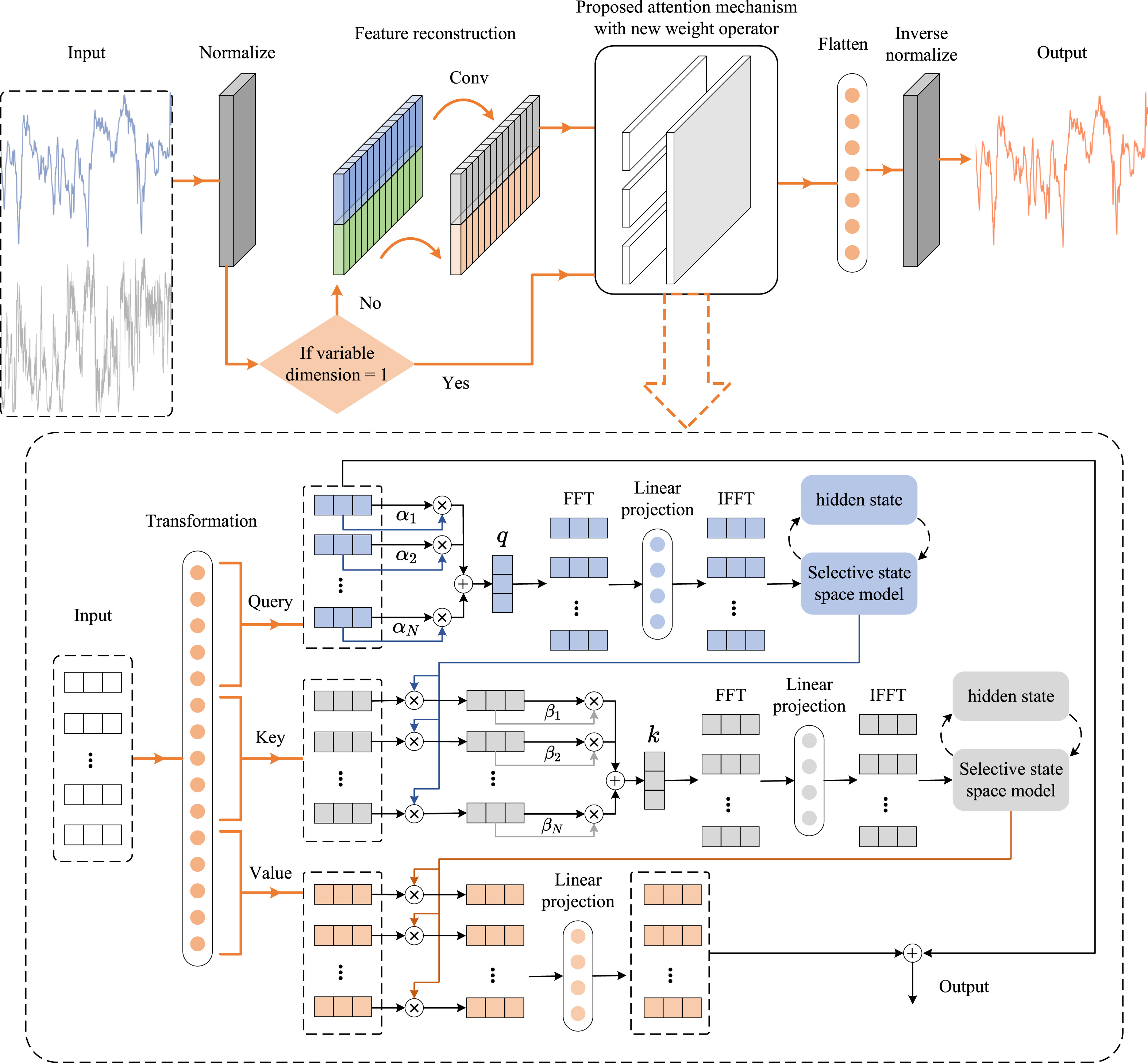
This paper proposes a novel selective memory attention mechanism to enhance wind speed prediction accuracy by leveraging auxiliary variables. The method introduces an adaptive frequency-domain selection attention weight operator to parse effective information from different frequency intervals, significantly reducing prediction errors compared to classical LSTM algorithms.

Featured image for Research News
2025
Apr

Enhanced Wave Buoy Analogy Through Heading Adjustment Strategy Based on Restricted Isometry Property

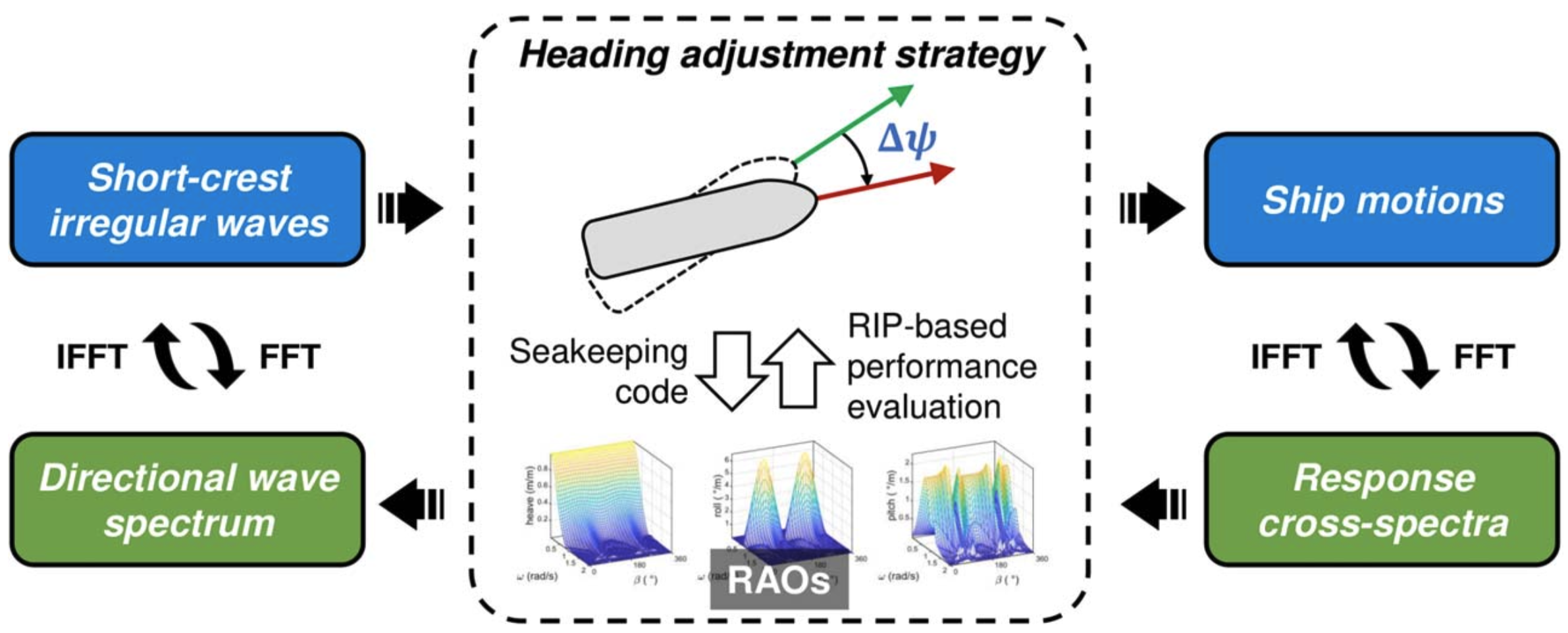
The performance of Wave Buoy Analogy (WBA) can degrade significantly in specific sea states (e.g., head or following seas) due to non-uniformly distributed RAOs, leading to inaccurate estimations. Building on previous work, this study proposes an adaptive heading adjustment strategy. This strategy utilizes the Restricted Isometry Property (RIP) to pre-evaluate WBA performance and actively adjusts the ship’s heading to an optimal angle. This mitigates response spectra measurement errors and performance degradation in specific sea states. Numerical simulations show the strategy significantly improves the accuracy and robustness of sea state estimation.

Featured image for Research News
2025
Feb

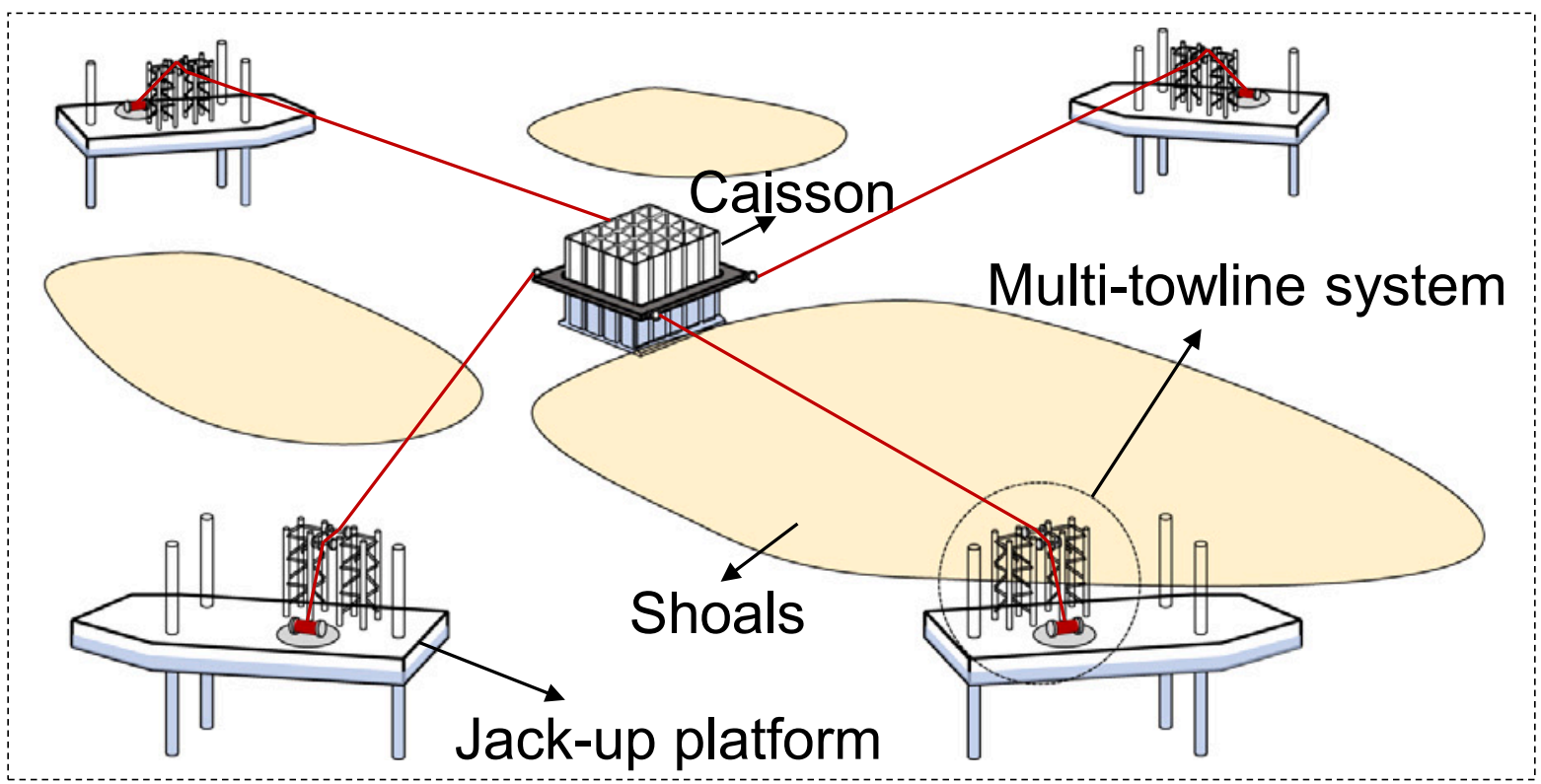
Operability analysis for collaborative caisson towing using multiple towlines in shallow waters with complex seabed topography

This study proposes a multi-towline collaborative towing method based on cable-driven parallel robots to enhance operational flexibility for caissons in shallow waters. It develops an operability analysis framework integrating potential flow theory, CFD validation, time-domain simulations, and a data-driven approach to determine passable regions under complex seabed conditions.

Featured image for Research News
2025
Jan

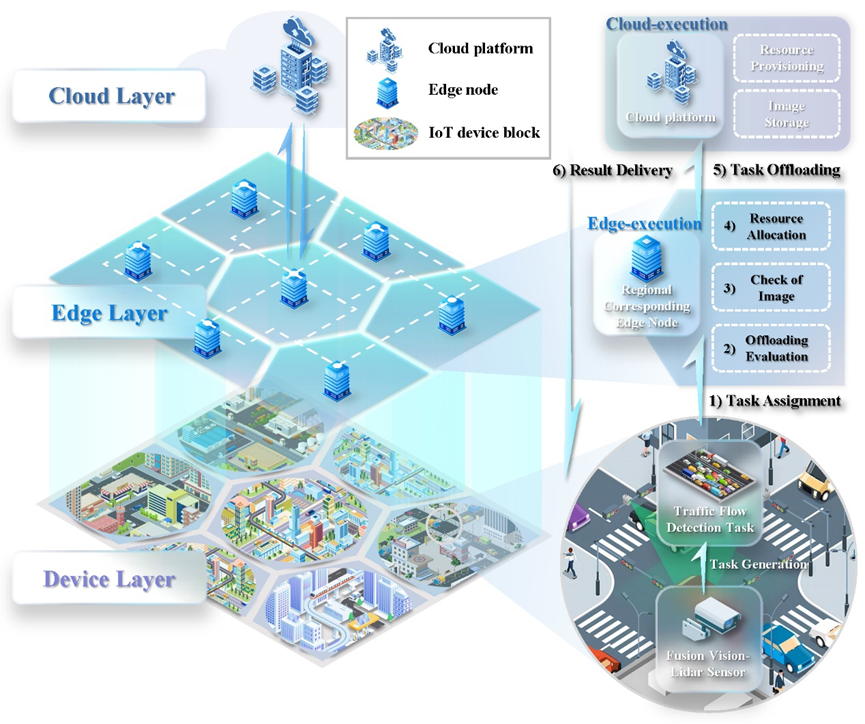
Geometrized Task Scheduling and Adaptive Resource Allocation for Large-Scale Edge Computing in Smart Cities

This paper proposes a novel framework that transforms large-scale task scheduling problems into geometric region partitioning problems, combines Tetris-like task offloading strategies with adaptive resource allocation algorithms, effectively solving task scheduling and resource allocation challenges in large-scale edge computing for smart cities. Experimental results show that this method significantly reduces task deadline violation rates, achieving more than 20-fold performance improvement compared to existing solutions.

Featured image for Research News
2024
Nov

Restricted Isometry Property in Wave Buoy Analogy and Application to Multispectral Fusion🏆

Real-time sea state information is crucial for marine operations. Wave Buoy Analogy (WBA) uses ship motion responses to estimate the wave spectrum, providing a cost-effective, real-time method. However, this method is susceptible to the non-uniformly distributed Response Amplitude Operators (RAOs), leading to performance degradation in specific sea states. This study introduces the Restricted Isometry Property (RIP) to evaluate WBA performance. An RAO-driven assessment criterion is proposed to pre-determine the reliability of estimates. Based on this, a multispectral fusion algorithm is developed. This algorithm can effectively fuse multiple estimates from ships with different geometries and headings to generate a comprehensive, robust, and accurate fused result. Numerical experiments demonstrate the algorithm’s effectiveness.

Featured image for Research News
2022
Apr

Data-driven simultaneous identification of the 6DOF dynamic model and wave load for a ship in waves🔥🏆

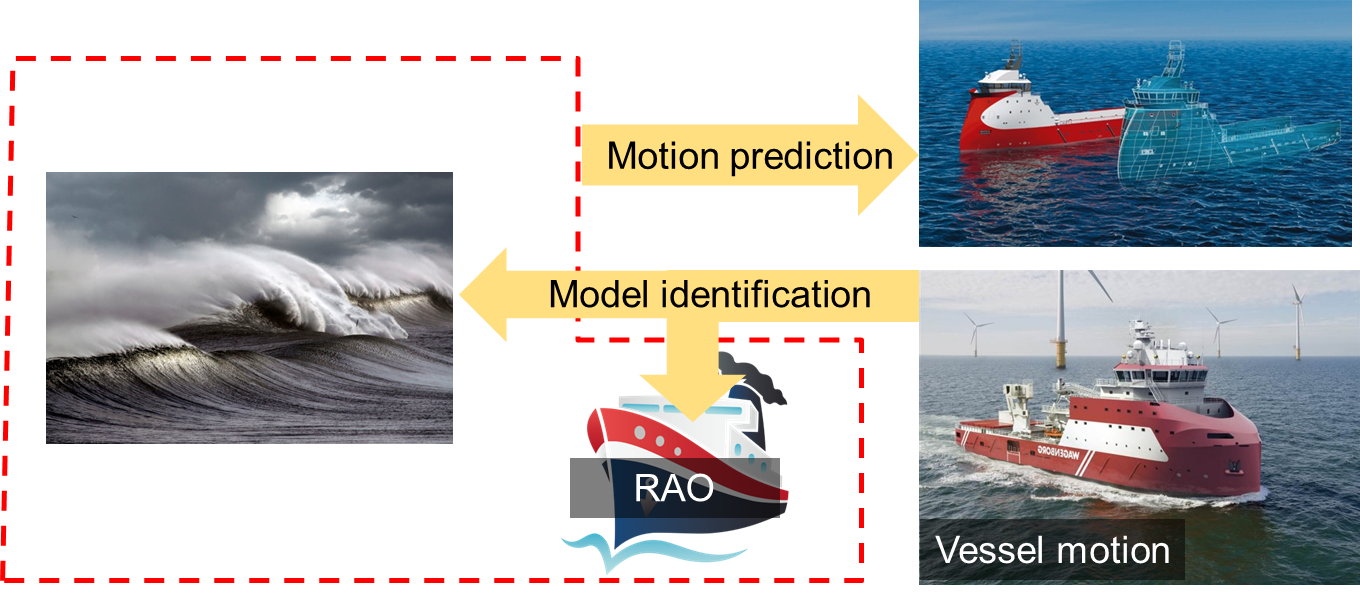
This research presents a novel data-driven framework for simultaneous identification of a parametric 6DOF ship model and wave loads using sparse regression (LASSO). It provides the first white-box 6DOF identification for ships in waves with full physical interpretability, enabling comprehensive load modeling and short-term motion prediction.

Featured image for Research News
2021
Jul

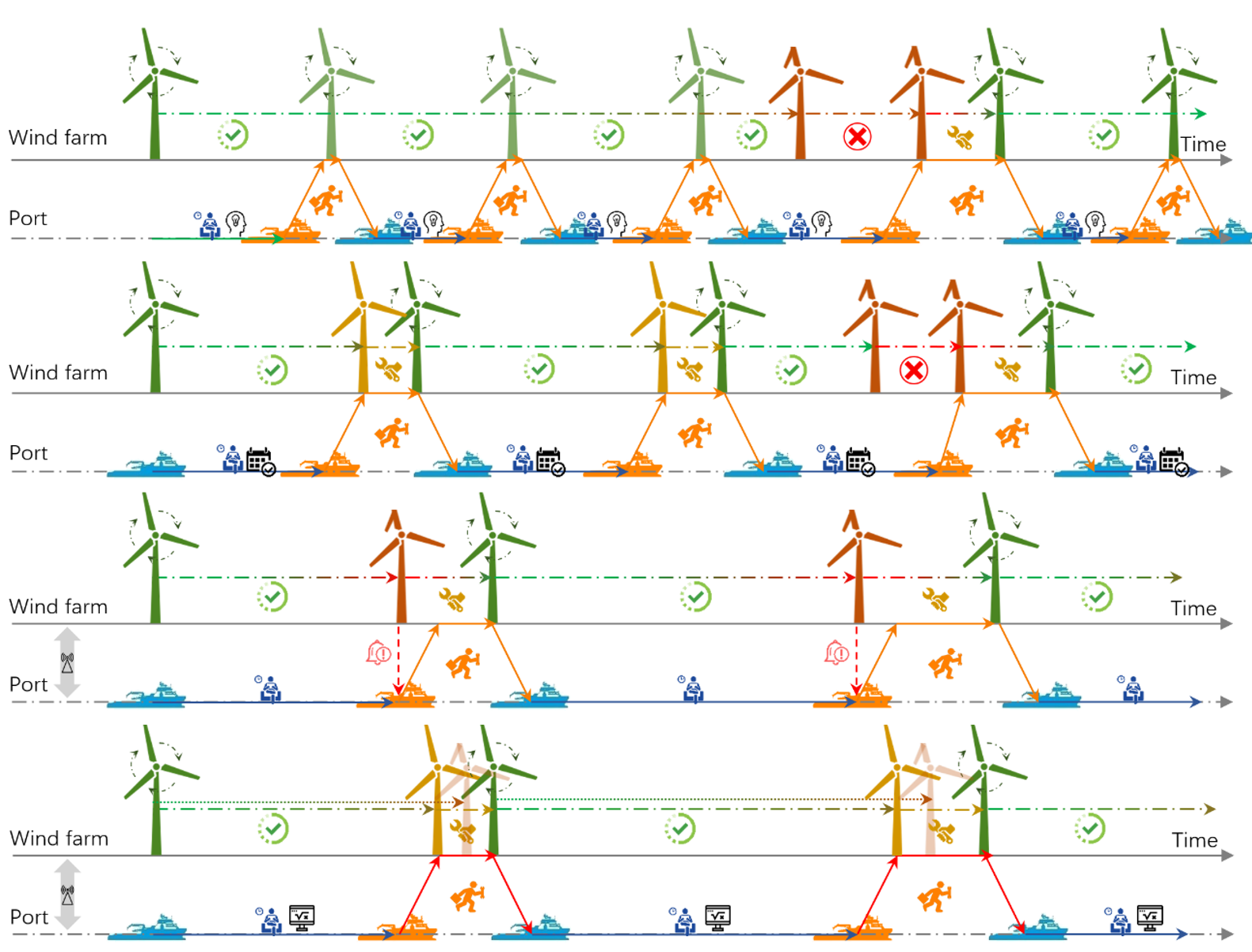
Offshore Wind Turbine Operations and Maintenance: A State-of-the-Art Review🔥🏆

This paper reviews the state-of-the-art research on offshore wind turbine maintenance, covering strategy selection, schedule optimization, onsite operations, repair, assessment criteria, recycling, and environmental concerns. It compares various methods, describes limitations in research and industrial development, and identifies promising areas for future studies.

Featured image for Research News